Your garage door is one of the largest and heaviest moving parts in your entire home — often weighing between 150 and 300 pounds. It operates dozens of times a week using a complex system of springs, cables, rollers, and tracks, all working together under significant tension. When any one of those components fails or falls out of alignment, the consequences can be far more serious than a simple inconvenience.
A malfunctioning garage door can cause thousands of dollars in property damage, crush a vehicle, injure a family member, or even create a security vulnerability that leaves your home exposed to intruders. The good news is that most of these dangers are entirely preventable with routine maintenance and prompt repairs. Here’s what every homeowner in Gilbert, Mesa, and the East Valley needs to know.
📖 Related: Maintenance Tips For Your Garage Door
Signs Your Garage Door May Be Malfunctioning
Catching problems early is the key to avoiding dangerous failures. Watch for these warning signs:
The door moves slowly, hesitates, or jerks during operation
You hear grinding, popping, banging, or squealing sounds
The door doesn’t fully close or reverses without anything blocking it
The door feels unusually heavy when lifted manually
Visible damage to springs, cables, or tracks
The opener runs but the door doesn’t move
The door closes unevenly or appears crooked
If you notice any of these signs, don’t wait. A small problem today can become a dangerous failure tomorrow. Contact a Same Day Garage Door Services technician for a same-day inspection.
📖 Related: Common Causes of an Off-Track Garage Door
Garage Door Photo-Electronic Sensors
Every modern automatic garage door is equipped with photo-electronic sensors positioned near the base of the door on both sides of the opening. These sensors create an invisible beam across the doorway — if anything breaks that beam while the door is closing, the door immediately reverses. This safety feature exists to prevent the door from closing on your car, your pet, a child’s bicycle, or a person.
According to the U.S. Consumer Product Safety Commission (CPSC), all automatic residential garage door openers manufactured after January 1, 1993 are federally required to include entrapment protection devices — including photo-electric sensors — under the Consumer Product Safety Improvement Act of 1990. Operating a garage door without functioning sensors is not only dangerous, it is non-compliant with federal safety standards.
Common sensor problems include dirt or debris blocking the lens, physical misalignment, and wiring faults. You may notice the door refusing to close, reversing unexpectedly, or the opener light blinking repeatedly. If your garage door is exhibiting any of these behaviors, call a professional immediately. And if your door predates 1993 and lacks these sensors entirely, a garage door installation upgrade is strongly recommended — the safety benefits are too important to delay.
📖 Related: Faulty Garage Door Openers and How to Spot Them
Metal Rollers, Springs, and Tracks
Your garage door travels up and down along metal tracks, guided by rollers on each side. The entire weight of the door is counterbalanced by torsion or extension springs under extreme tension. This combination of components is what makes your door feel light and easy to operate — but it also makes a failure potentially dangerous.
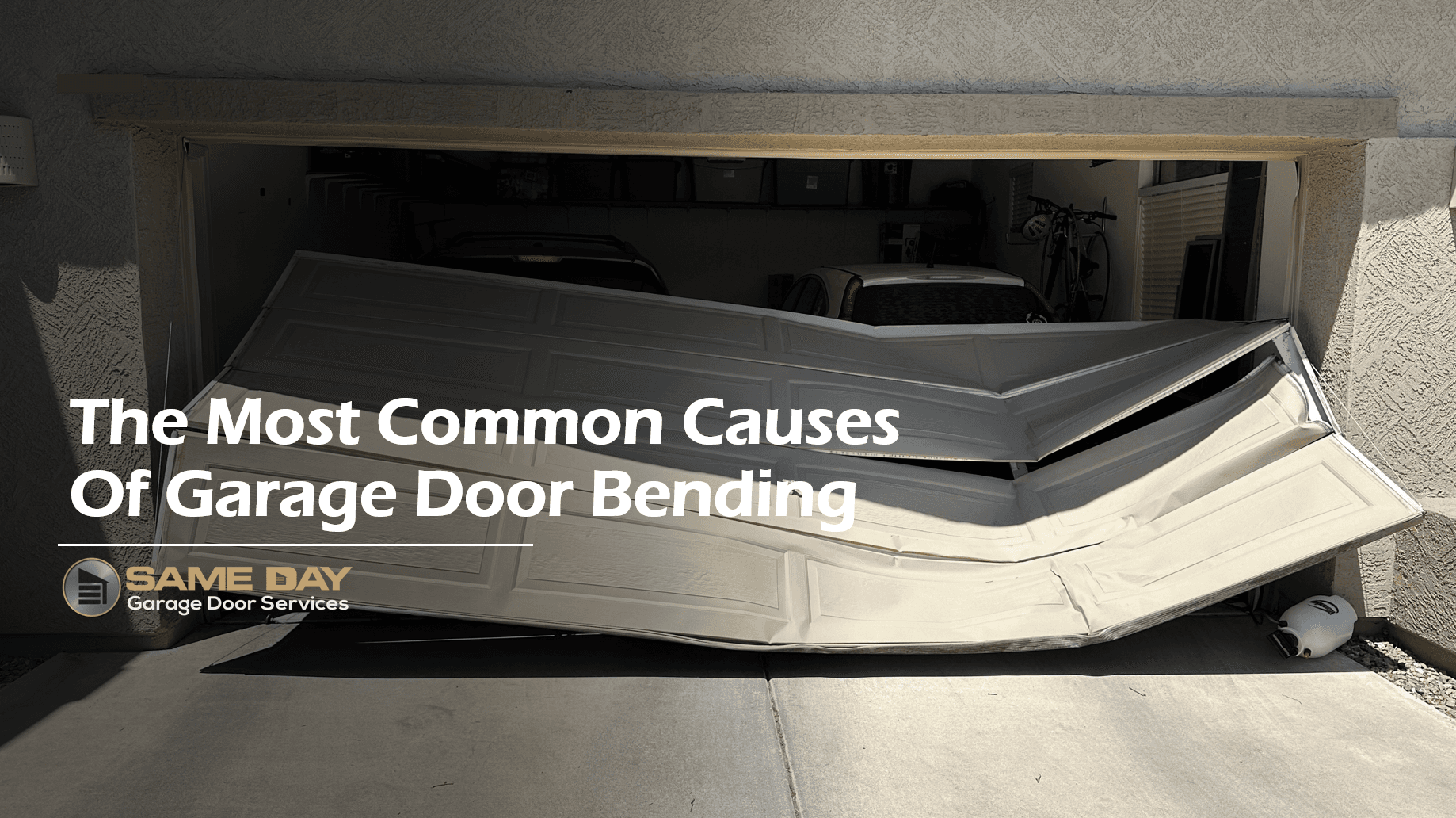
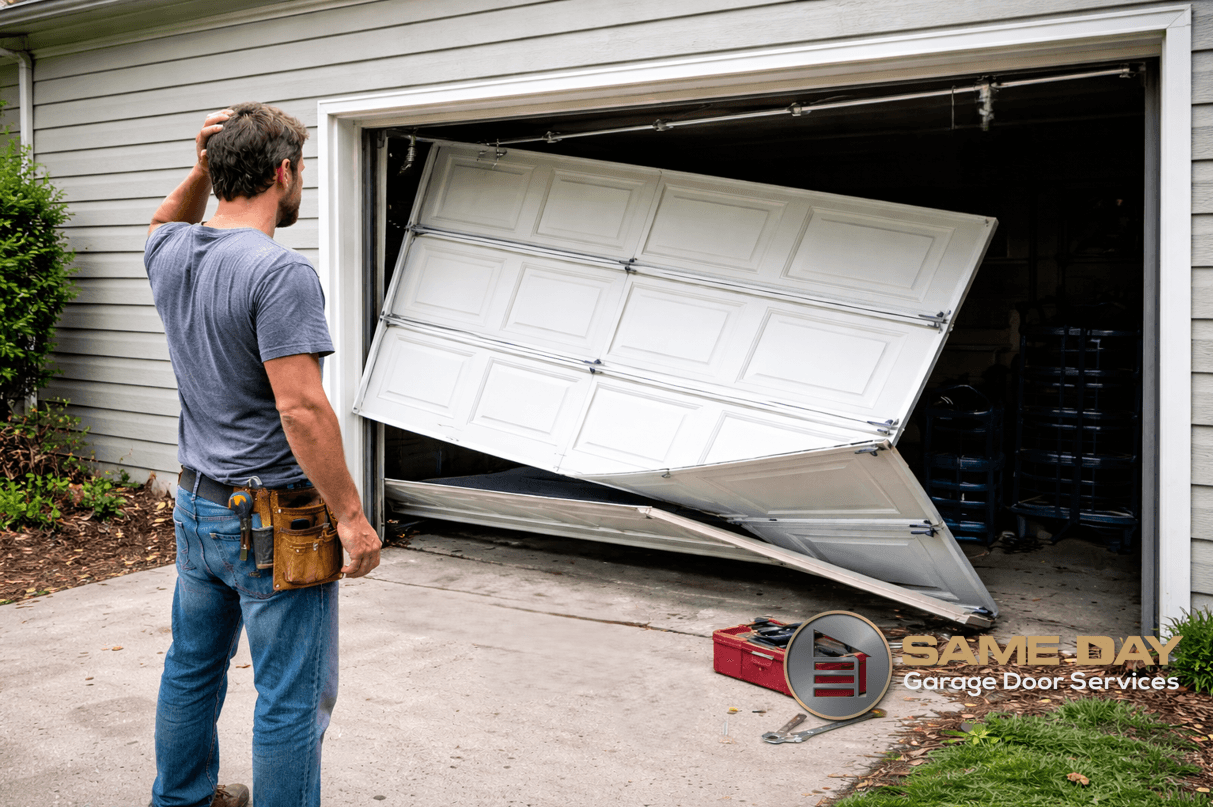
When rollers become corroded, cracked, or clogged with debris, the door can come off its track entirely. A door that has jumped its track is unpredictable and can fall suddenly. Misaligned tracks cause uneven stress on the entire system, accelerating wear on every other component. And a broken spring — one of the most common garage door failures — can cause the door to drop without warning, damaging anything or anyone beneath it.
The Door and Access Systems Manufacturers Association (DASMA) recommends that homeowners have their garage door system professionally inspected at least once a year, with tracks cleaned, rollers checked for wear, and springs evaluated for fatigue. This is especially important in Arizona’s climate, where extreme heat accelerates metal fatigue and expansion.
A regular maintenance schedule that includes cleaning, lubrication, and professional realignment is the most effective way to keep these components safe and functioning correctly.
📖 Related: Leading Causes and Solutions for Broken Garage Door Springs
Garage Door Security Features
Your garage door is the largest entry point into your home, and for many households it’s the primary way in and out every single day. A malfunctioning garage door opener doesn’t just create a safety hazard — it creates a security vulnerability. When the opener’s encryption or rolling code system fails or becomes outdated, it can potentially allow unauthorized access to your home.
Older garage door openers that rely on fixed codes are particularly susceptible to code-grabbing devices that criminals can use to record and replay your signal. Modern openers using rolling code technology — which generates a new encrypted code with every use — eliminate this risk entirely.
If your opener is more than 10 years old, doesn’t use rolling code technology, or has been showing signs of malfunction, upgrading is a smart investment in both your safety and your home’s security.
📖 Related: How Rolling Code Protects Your Garage Door from Thieves
📖 Related: The New Generation of LiftMaster Garage Door Openers Is Here
The Risk to Your Family and Property
It’s easy to underestimate how dangerous a malfunctioning garage door can be. A garage door operating under a broken spring has essentially no counterbalance — its full weight of 150 to 300 pounds is unsupported. A door that comes down unexpectedly can total a vehicle, destroy stored belongings, and cause catastrophic injury.
Children are particularly at risk. The CPSC has documented numerous incidents involving children being struck or trapped by garage doors, which is precisely why federal safety regulations around sensors and auto-reverse features were enacted. Testing your door’s auto-reverse function monthly — by placing a 2x4 flat on the ground in the door’s path and closing it — takes less than 30 seconds and could prevent a tragedy.
A proactive approach — scheduling annual maintenance, addressing warning signs immediately, and not delaying repairs — is always far less expensive and far less dangerous than waiting for a complete failure. Before hiring any contractor, it’s also worth checking Angi to read verified reviews of local garage door companies in the East Valley to make sure you’re working with a trusted professional.
📖 Related: Garage Door Repair Scams and What to Watch Out For
How to Respond to a Malfunctioning Garage Door
If your garage door is showing signs of trouble, here’s what to do:
Stop using the door until it has been inspected — operating a door with a known problem risks making it worse or causing sudden failure.
Do not attempt to repair springs or cables yourself — these components are under extreme tension and are responsible for the majority of serious garage door injuries.
Call a licensed technician the same day — most garage door problems are quick and affordable to fix when caught early.
Request a full safety inspection — a good technician will check every component, not just the obvious problem.
Schedule Garage Door Repair in Gilbert, Mesa & the East Valley
A malfunctioning garage door is not something to put off. Whether you’re dealing with a noisy opener, a door that won’t fully close, a broken spring, or sensors that aren’t responding correctly, Same Day Garage Door Services is ready to help — today. Our licensed, bonded, and insured technicians serve Gilbert, Mesa, Chandler, Tempe, Queen Creek, and the entire East Valley.
Contact us for a free estimate on a new garage door, or schedule service online.

Trevor L.