The Dangers Of Replacing a Garage Door Spring By Yourself
If your garage door spring has broken and you’re considering replacing it yourself to save money, this article is for you. We’re going to be direct: garage door spring replacement is one of the most dangerous DIY home repair tasks a homeowner can attempt — and the consequences of getting it wrong range from serious property damage to life-threatening injury.
This isn’t a scare tactic. It’s a reality that garage door technicians who have seen these accidents firsthand want every homeowner to understand before picking up a wrench.
📖 Related: The Dangers of Faulty Garage Door Springs
⚠️ The Primary Danger: Extreme Tension
The most important thing to understand about garage door springs is that they don’t just hold weight — they store enormous amounts of mechanical energy. A torsion spring on a standard residential garage door is wound to a tension sufficient to counterbalance a door weighing 150 to 400 pounds. That energy is always present in the spring, whether the door is open or closed.
When a spring fails — or when an improperly wound spring releases unexpectedly — that stored energy discharges instantly and violently. A snapping torsion spring can fly across a garage at high velocity, destroying everything in its path. Extension springs without safety cables can whip free and cause severe lacerations. The U.S. Consumer Product Safety Commission (CPSC) reports approximately 30,000 garage door-related injuries in the United States every year — spring-related incidents are among the most serious.
No amount of YouTube tutorials or DIY experience prepares an untrained person to safely manage a component under this level of mechanical tension.
📖 Related: Leading Causes and Solutions for Broken Garage Door Springs
The Two Types of Garage Door Spring Systems
There are two spring system types used on residential garage doors, and both carry significant danger when improperly handled.
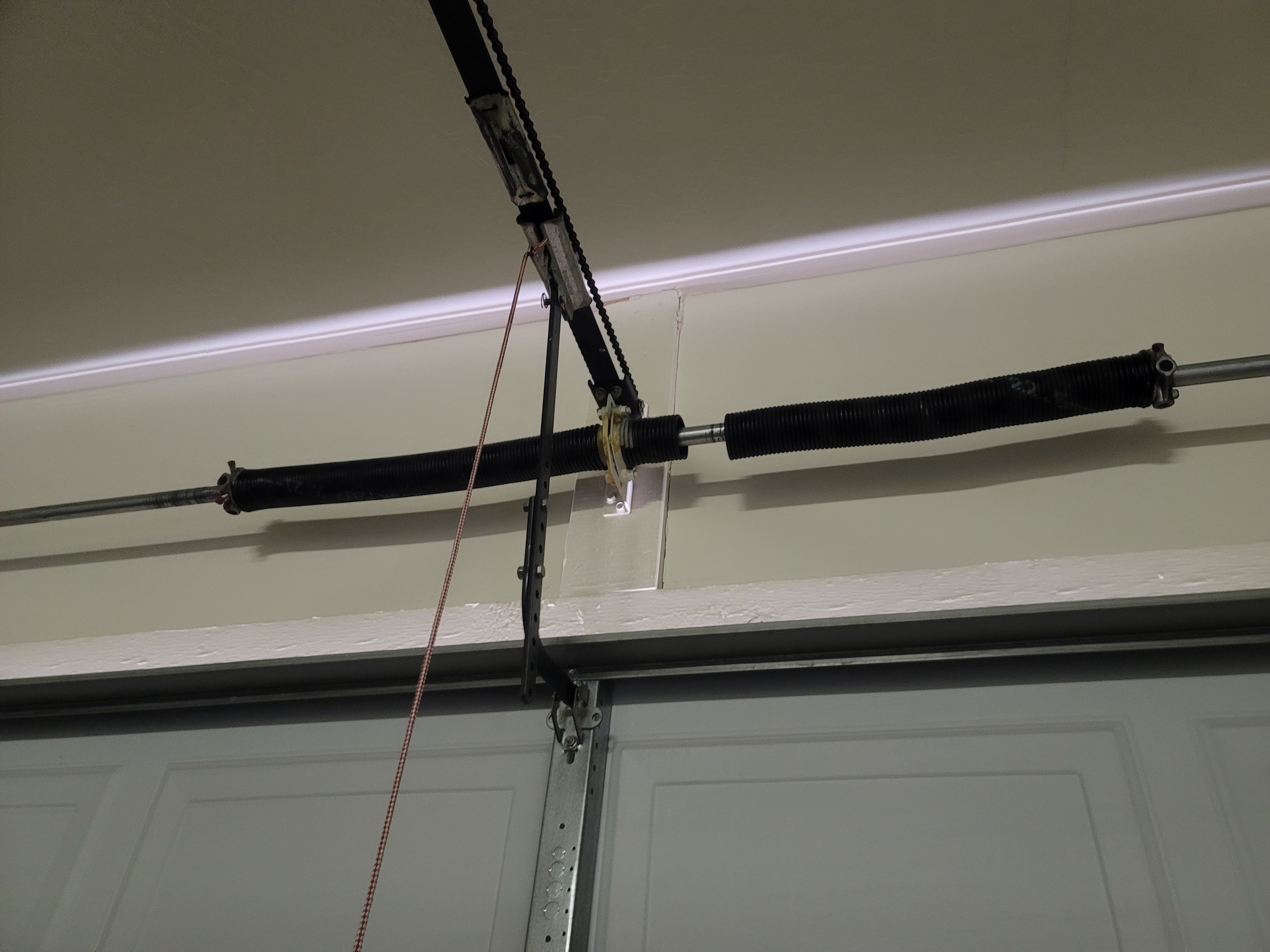
Torsion Spring System — Mounted horizontally above the garage door opening on a metal shaft. Torsion springs work by winding and unwinding to lift and lower the door. Winding and unwinding these springs requires special winding bars inserted into winding cones — using the wrong tools, or losing control of the bars during winding, can result in the spring releasing its full tension instantly. This is one of the most common causes of serious garage door injuries.
Extension Spring System — Two springs run along the horizontal tracks on either side of the door, stretching and contracting as the door opens and closes. Extension springs must be equipped with safety containment cables running through the center of each spring. Without those cables, a snapping extension spring becomes an unguided projectile. Even with cables, the forces involved make DIY repair genuinely hazardous.
According to the Door & Access Systems Manufacturers Association (DASMA), spring replacement should only ever be performed by trained door systems technicians — not because it’s complicated, but because the forces involved make even small errors potentially catastrophic.
📖 Related: How to Pick the Right Springs for Your Garage Door
Why the Tools Alone Make This Dangerous
Professional technicians use specialized equipment when replacing garage door springs — including calibrated winding bars, tension gauges, and safety clamps — that most homeowners don’t own and can’t easily purchase. Improvising with substitute tools is one of the leading causes of spring-related injuries.
Using the wrong bar length when winding a torsion spring, for example, provides inadequate leverage and control. If the bar slips during winding, the spring can spin the cone violently — with enough force to break bones or cause severe facial injury. This is not theoretical — it is a documented, recurring cause of emergency room visits across the country.
Even professional technicians treat spring replacement as a high-caution procedure. That context should tell you everything you need to know about attempting it without training.
How Long Do Garage Door Springs Last?
Understanding spring lifespan helps you anticipate when a replacement might be coming so you can plan ahead — calling a professional before a failure happens rather than after.
Spring lifespan is measured in cycles — one cycle equals one complete open-and-close operation. Standard residential springs are rated for approximately 10,000 cycles, which typically translates to 7–12 years of normal use depending on how frequently the door operates. High-cycle springs — a worthwhile upgrade — are rated for 20,000 cycles or more and last significantly longer.
In Arizona’s climate, extreme heat can accelerate metal fatigue in springs, potentially shortening their effective lifespan compared to springs in milder climates. Having your springs inspected as part of an annual maintenance visit is the best way to catch developing fatigue before a failure occurs.
📖 Related: How Often Should I Get My Garage Door Opener Serviced?
What to Do Immediately If Your Spring Breaks
If you hear a loud bang from your garage — often described as sounding like a gunshot — and your door suddenly feels extremely heavy or won’t open, a spring has likely broken. Here’s what to do:
Stop using the door immediately. Do not operate the opener. Running the opener motor against the full unbalanced weight of the door can burn out the motor and cause additional damage.
Leave the door in the closed position — this is the safest position when a spring is broken.
Do not attempt to open the door manually unless it’s a genuine emergency — a door without spring support can weigh several hundred pounds and can drop suddenly.
Call a licensed technician for same-day service — spring replacement is one of the most common and fastest repairs a professional technician handles.
📖 Related: What Causes Garage Door Brackets To Break?
DIY vs. Professional: Is the Savings Worth the Risk?
According to Angi’s Phoenix garage door spring replacement cost guide, the average professional spring replacement in the Phoenix metro area costs between $155 and $362, with most homeowners paying around $258. That cost includes the correct springs for your door’s weight, professional installation with calibrated tools, and a safety inspection of the full system.
A DIY attempt that goes wrong can result in emergency medical bills, a damaged vehicle, structural damage to the garage, or a completely destroyed opener and door system — costs that dwarf the professional service fee many times over. And that’s before considering the human cost of a serious injury.
The math is straightforward: professional spring replacement is the better value in every scenario.
📖 Related: Why DIY Garage Door Repairs Are a Bad Idea
Get Same-Day Spring Replacement in Gilbert, Mesa & the East Valley
Don’t put your safety at risk. Same Day Garage Door Services provides fast, professional garage door spring inspection and replacement throughout Gilbert, Mesa, Tempe, Chandler, Queen Creek, Ahwatukee, and the entire East Valley. Our licensed, bonded, and insured technicians have the training and equipment to replace your springs safely and correctly — often the same day you call.
Contact us today for a free estimate on a new garage door, or schedule your service online.
📖 Related: Garage Door Repair Scams and What to Watch Out For

Trevor L.