Your garage door is made up of more components than most homeowners realize — springs, cables, rollers, tracks, hinges, brackets, panels, sensors, and an opener, all working together in a precise sequence dozens of times a week. Any one of those components can wear out, get damaged, or fail — and when that happens, the effects ripple quickly through the rest of the system.
Understanding the most common causes of garage door damage helps you know what to inspect, what to maintain, and when to call for help before a small problem becomes a major repair. Here are the five causes we see most often throughout the East Valley.
📖 Related: Common Garage Door Problems That Need to Be Addressed
1. Broken or Worn Springs
Springs are the heart of your garage door system. They counterbalance the full weight of the door — which can range from 130 to 400 pounds — making it possible for the opener motor to lift and lower it with minimal effort. When springs wear out or break, the entire system is affected. A door without functioning springs places excessive load on the opener motor, strains the cables, and can fall suddenly without warning.
Springs are tightened by winding them to create torque, which stores the mechanical energy used to counterbalance the door’s weight. This is precisely why spring repair and replacement must only be performed by a trained professional technician. The U.S. Consumer Product Safety Commission (CPSC) reports approximately 30,000 garage door-related injuries per year in the United States — broken springs are among the most serious contributors. If you hear a loud bang from your garage — often described as sounding like a gunshot — a spring has likely broken. Stop using the door immediately and call for service.
In Arizona’s East Valley, extreme heat accelerates metal fatigue in springs, potentially shortening their lifespan compared to springs in milder climates. Annual inspections are especially important here.
📖 Related: When Should My Garage Door Springs Be Replaced?
2. Worn Rollers
The rollers are the small wheels that sit inside the tracks on either side of your garage door, guiding the door smoothly through its travel path as it opens and closes. Over time, rollers wear down — especially steel rollers, which are subject to both metal fatigue and corrosion. Worn rollers cause the door to run roughly, make grinding or squealing sounds, and in more serious cases, to jump out of the track entirely.
Even minor roller wear creates additional stress on the tracks, hinges, and opener motor, accelerating wear on the entire system. Replacing worn steel rollers with nylon rollers — which are quieter, don’t require lubrication, and tend to last longer — is one of the most cost-effective upgrades a homeowner can make. If you notice your garage door is running rough or making more noise than usual, worn rollers are one of the first things a technician will check.
📖 Related: 7 Ways to Achieve Completely Silent Garage Door Operation
3. Worn Hardware
Every garage door system relies on dozens of fasteners, hinges, brackets, and bolts to hold its components in precise alignment. The constant vibration and movement of daily operation gradually works these fasteners loose, and the hardware itself wears down over time. Loose or worn hardware causes rattling, misalignment, and — if left unaddressed — can lead to more significant structural problems.
The good news is that hardware maintenance is one of the simplest things a homeowner can do on their own. A periodic check with a wrench to tighten any loose bolts, followed by an application of silicone-based lubricant on all moving metal parts, takes about 30 minutes and can significantly extend the life of your door system. If hardware appears cracked, bent, or heavily corroded rather than just loose, replacement is the right call.
📖 Related: Maintenance Tips For Your Garage Door
4. Misaligned or Damaged Tracks
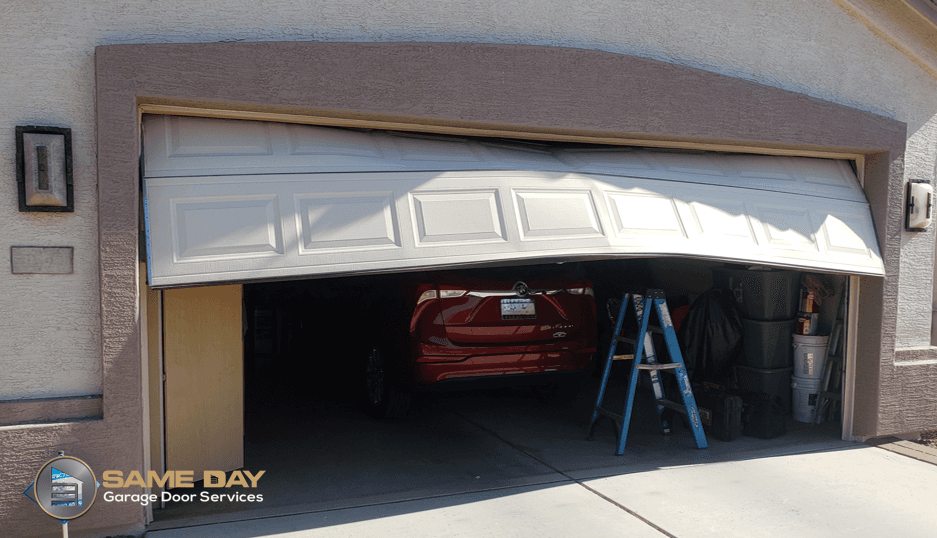
The tracks on both sides of your garage door guide the rollers through every open and close cycle. With the amount of movement a typical garage door sees — potentially thousands of cycles per year — tracks can shift out of alignment over time, or sustain damage from impact. Even a small misalignment creates uneven stress across the system and will worsen progressively as the door continues to operate.
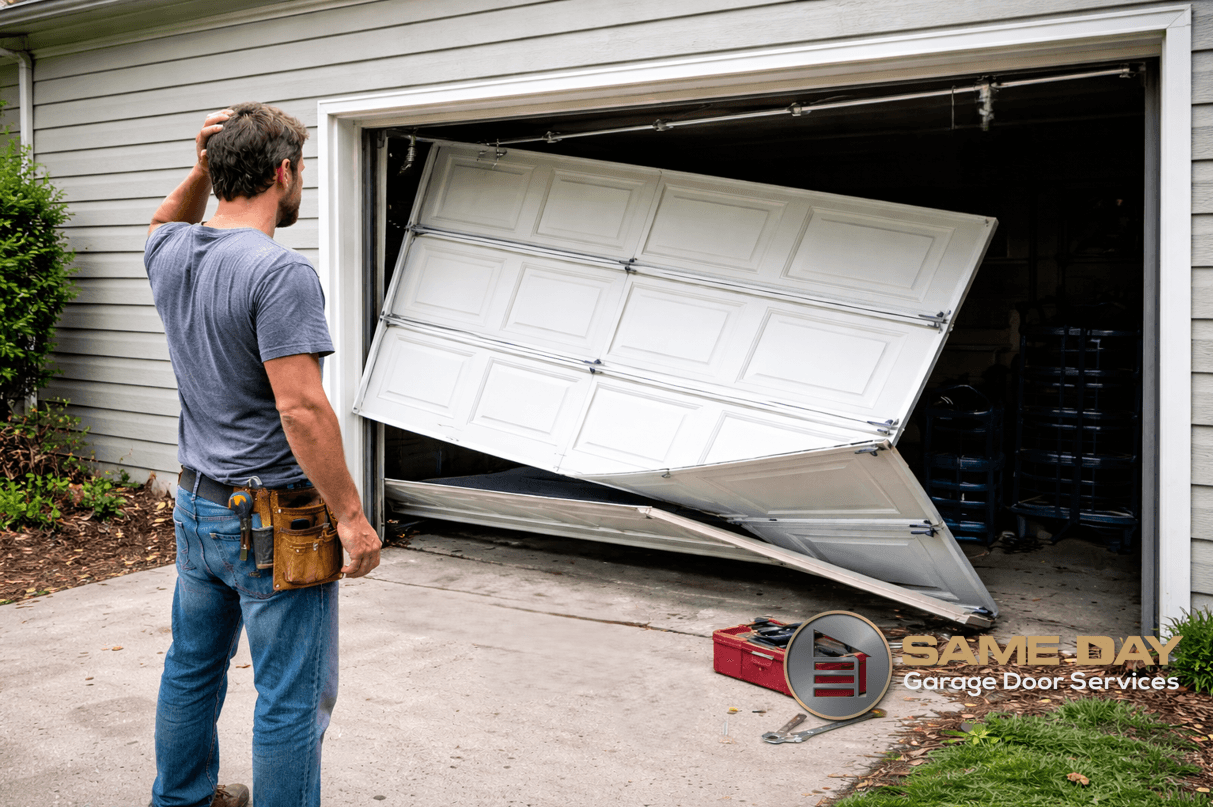
A misaligned track is one of those problems that never fixes itself. The door will continue forcing itself through an incorrect path, causing damage to the rollers, panels, and eventually the opener motor. If you notice the door moving unevenly, sticking at a certain point in its travel, or see visible gaps between the rollers and the track walls, misalignment is a likely cause. Track realignment is a job for a professional technician — improper adjustment can make the problem worse and create a safety hazard.
📖 Related: Common Causes of an Off-Track Garage Door
5. Vehicle Impact
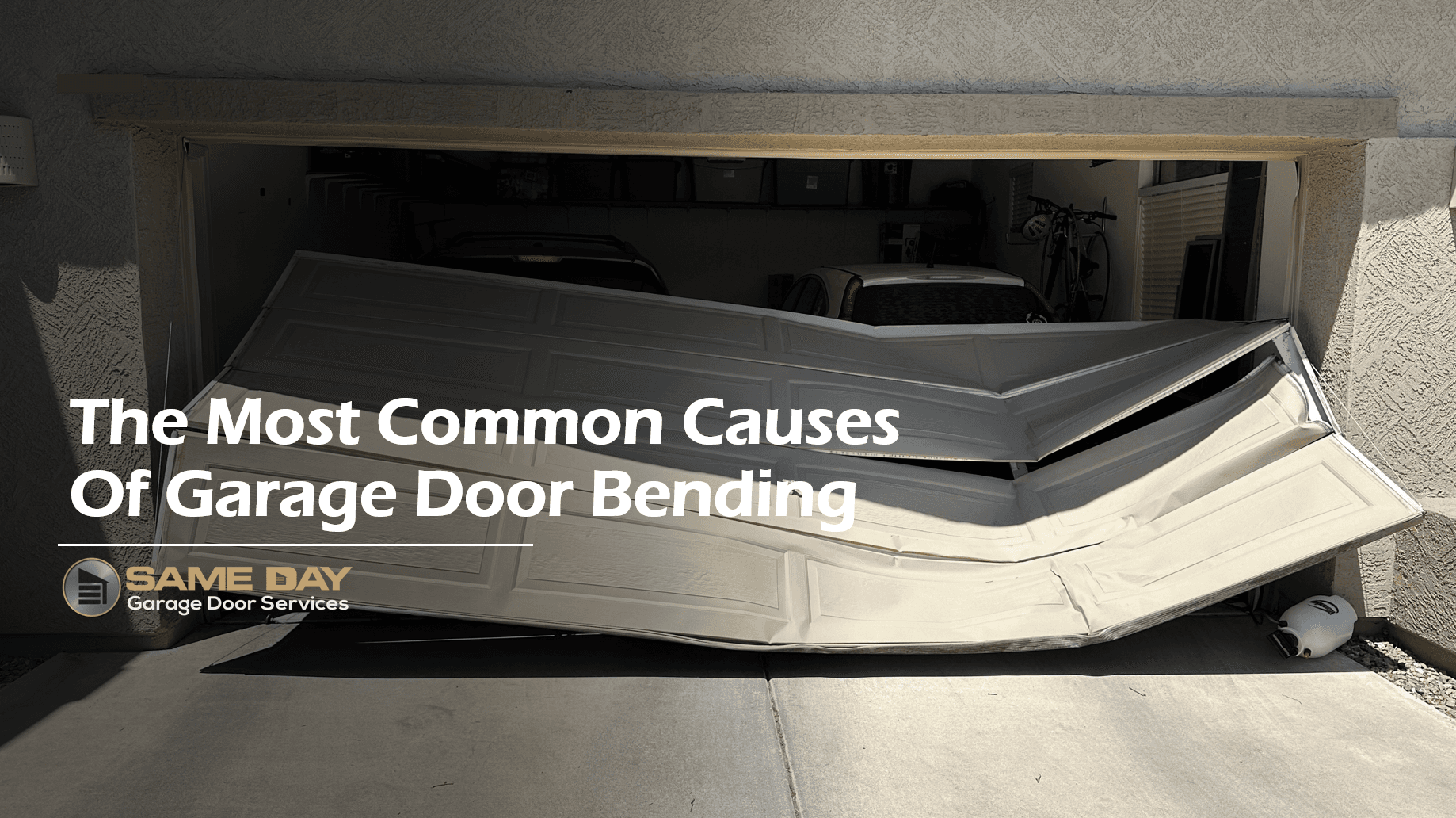
Vehicle impact is one of the most common — and most immediately obvious — causes of garage door damage. Even a slow-speed collision between a vehicle and a closed or partially open garage door can dent panels, bend tracks, damage brackets, and throw the entire door out of alignment. In some cases, the door may still operate after an impact, but with compromised structural integrity that worsens with continued use.
In less obvious cases, a minor bump that doesn’t visibly dent a panel can still bend a track or knock a bracket loose in ways that aren’t apparent until the door starts behaving abnormally. If your vehicle — or any equipment, bicycle, or object — has made contact with your garage door, have it professionally inspected before continuing to use it, even if it appears to be functioning normally.
📖 Related: How a Damaged Garage Door Could Put You at Risk
Arizona-Specific Causes: Heat, UV, and Monsoon Season
East Valley homeowners face additional causes of garage door damage that aren’t covered in most national guides. Arizona’s combination of extreme heat, intense UV radiation, and monsoon season creates a uniquely demanding environment for every garage door component.
Extreme heat accelerates wear on rubber seals, lubricants, and metal components alike. Springs and cables that might last a decade in a milder climate can fatigue faster here. Vinyl and wood door surfaces are particularly vulnerable to warping, fading, and cracking under triple-digit temperatures.
UV radiation — among the most intense in the country — breaks down painted finishes, fades door colors, and degrades rubber weatherstripping faster than in most other states. Applying a UV-protective sealant and keeping the door clean extends its finish significantly.
Monsoon season deposits wind-driven dust, debris, and moisture that accumulates in tracks, compromises seals, and corrodes metal hardware. Scheduling a professional inspection and cleaning after monsoon season is one of the most practical maintenance steps an East Valley homeowner can take.
📖 Related: How Arizona Seasons Can Affect Your Garage Door
How to Prevent Garage Door Damage
The most effective protection against all five of these causes is a consistent maintenance routine. Routine maintenance can help prevent some of these problems from occurring, but time will always catch up with your garage door. The best thing you can do is stay vigilant and act immediately when you notice any signs of a problem — that will help you head off any repairs or keep them at a minimum. As DASMA recommends, an annual inspection by a trained door systems technician is the single most effective thing a homeowner can do to extend the life of their garage door system and catch developing issues before they cause serious damage.
📖 Related: Do I Need a Garage Door Inspection?
Same Day Garage Door Repair in Gilbert, Mesa & the East Valley
Whether you’re dealing with a broken spring, worn rollers, a bent track, or impact damage, Same Day Garage Door Services provides fast, professional garage door repair throughout Gilbert, Mesa, Tempe, Chandler, Queen Creek, Ahwatukee, and the entire East Valley. Our friendly, licensed, bonded, and insured technicians can get to the bottom of any problem and get your door operating safely — often the same day you call. For a current breakdown of what garage door repairs typically cost in the Phoenix metro area, Angi’s repair cost guide is a helpful reference. Same Day Garage Door Services provides emergency garage door repair in Phoenix across the Phoenix metro area.
Contact us today to schedule an appointment, or call or text us at 480-750-7975. Find out why we’re one of the top-rated garage door repair companies in the East Valley.

Trevor L.