7 Regular Maintenance Tips to Keep Your Garage Door Functioning
Replacing your garage door can cost several thousand dollars, depending on what kind of quality you choose. But maintaining your garage door costs a fraction of that, and it helps to prolong the life of the garage door for years.
This will save you money on replacement and on what would otherwise be unnecessary repairs.
Garage door maintenance does not have to be time-consuming or expensive, but it does need to be consistent. Here are seven regular maintenance tasks you should be doing — or hiring a professional to do — to keep your garage door functioning:
📖 Related: Maintenance Tips For Your Garage Door
1. Tighten the Hardware
The hardware on any moving object will get loose over time. When the hardware on your garage door gets loose, the panels may shake, the other components may rattle, and the door can wear down more quickly over time.
You'll also deal with a lot more noise.
Take the time to tighten the hardware regularly. Any nuts, screws, bolts, or other items that can be tightened should be.
But be careful — you don't want to over-tighten anything and strip out any of the fasteners.
2. Lubricate Moving Parts
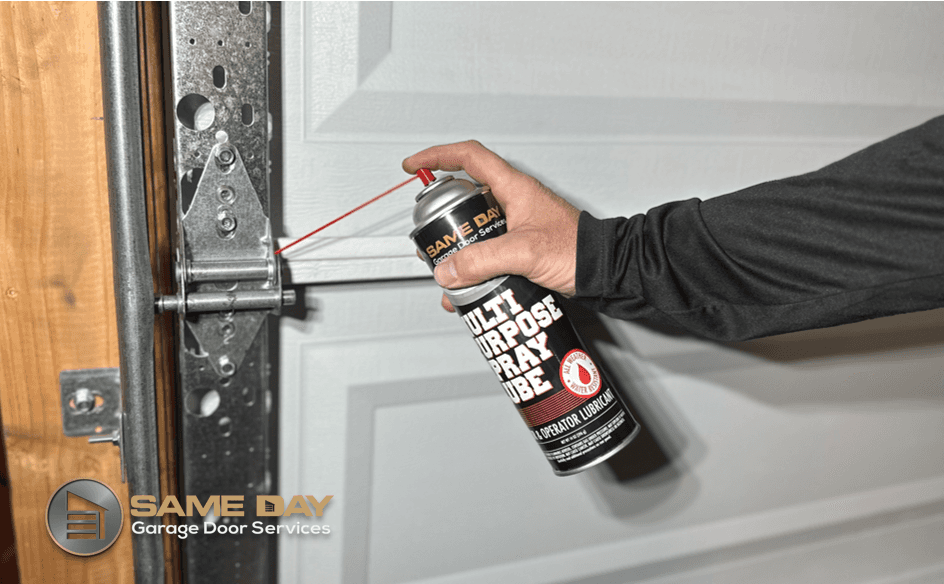
Any moving parts on your garage door should be lubricated so that there is not friction when they rub together. When parts start to rub together harshly, they wear down faster, and they can break. And, again, you'll be dealing with a lot of noise.
Use a white lithium grease or silicone-based spray lubricant on springs, hinges, rollers, and other moving metal parts. Avoid oil-based lubricants — they attract dirt and debris, which can build up and interfere with the door's operation. The PVC door frame and weather seal should not be lubricated at all. You shouldn't have to lubricate often — usually just once a year or so, ideally in the spring and fall.
📖 Related: How and Why You Should Use Garage Door Lubricant
3. Inspect the Rollers
The rollers help your garage door to function smoothly. If they are damaged or need to be replaced, your garage door will not open and close properly. The friction could even cause further damage to the door.
Your rollers may be nylon, steel, or plastic. No matter what material they are, you need to hire a local garage door repair service to inspect them regularly and to replace them as needed.
Typically, the rollers should be inspected and lubricated twice a year. They should be replaced if they are cracked, chipped, or generally worn.
Even with good maintenance, standard quality rollers will need to be replaced an average of every seven years.
4. Test the Door Balance
When hardware becomes loose, springs become weaker, or parts are damaged, the door will feel heavier and become unbalanced. An unbalanced garage door will cause the opener to work harder, which will shorten its life.
Other parts can also be damaged because the door is not balanced.
As DASMA recommends, you can check whether the door is unbalanced by disconnecting the door opener — just pull the release handle when the door is in the down position — and then manually pushing the door about halfway up the tracks. The door should stay where it is. If it doesn't, the springs are no longer balanced properly. You'll need to call your garage repair professional to tighten the springs and rebalance the door.
Warning: Garage door springs are under extreme tension and can cause serious injury or death, and should only be installed or adjusted by a trained garage door technician.
📖 Related: When Should My Garage Door Springs Be Replaced?
5. Inspect the Cables
Springs, hardware, and high-tension cables hold your garage door in place and make sure it moves properly. If any of those parts is too loose, too tight, or unbalanced, it will cause problems with your door.
Don't try to repair the cables yourself, or you risk injuring yourself. Just inspect them visually to see if there are any broken cables or other damage. If there is, call a garage door repair service for help.
6. Test the Auto-Reverse Features
Newer garage doors have a safety feature that detects any obstacles in the path of the door and automatically reverses the door when items are present. If this feature isn't working properly, your garage door could crush your car, your pets, or even your children. Test this feature regularly.
Put a 2x4 piece of wood where the door closes and close it. The door should press down on the 2x4 and then back up again.
Garage door openers also have photo-eye safety sensors to detect objects that could block or prevent the garage door from closing properly. Simply wave your foot in front of the beams when the door is closing to see if it goes back up again.
If your door fails either test, call a professional for repair immediately.
7. Replace Weather Stripping
Weather stripping lines the bottom of your garage door and helps to keep your home better insulated and to keep pests out of your house. When it becomes cracked or damaged, it fails in both of those duties.
Inspect and replace the weather stripping regularly. This is a job you can potentially do yourself.
Most hardware stores offer a universal seal that can fit in most garage door bottom seal retainers.
Pro Tip: Apply some silicone spray in the bottom seal track and it will help install the seal much easier!
How Often Should You Perform Each Task?
Consistency is the key to effective garage door maintenance. Here's a quick reference for how often each task should be performed:
Tighten hardware — Once a year, or any time you notice rattling or shaking
Lubricate moving parts — Once or twice a year — spring and fall are ideal for East Valley homeowners
Inspect rollers — Twice a year; replace every 5–7 years or sooner if visibly worn
Test door balance — Once a month — takes less than 60 seconds
Inspect cables visually — Once a month during your balance check
Test auto-reverse — Once a month — a critical safety check that takes less than a minute
Inspect weather stripping — Twice a year; replace when cracked, compressed, or visibly gapped
📖 Related: How Often Should I Get My Garage Door Opener Serviced?
When to Schedule a Professional Maintenance Visit
While all of the tasks above can be performed by an attentive homeowner, an annual professional maintenance visit provides a deeper level of inspection and service that goes beyond what most homeowners can do on their own. A trained technician will check spring tension and balance, test cable integrity, inspect all hardware for wear and corrosion, lubricate all components correctly, test the opener's force settings, and verify the auto-reverse and sensor systems are within safe operating parameters.
In Arizona's East Valley, we recommend scheduling your professional maintenance visit in the spring — before monsoon season and the extreme summer heat arrive. Both put additional stress on springs, seals, and metal components, and catching any developing issues before those seasons begin is always the smarter and more affordable approach.
📖 Related: Do I Need a Garage Door Inspection?
Schedule Garage Door Maintenance in Gilbert, Mesa & the East Valley
Performing these and other routine maintenance tasks can help your garage door stay in better shape for a longer time. Not only will you spend less on repairs over the years, but your garage door will also last longer — saving you money on replacement down the road.
Same Day Garage Door Services offers garage door maintenance, repair, and replacement in Gilbert, Mesa, Tempe, Chandler, Queen Creek, Ahwatukee, and the entire East Valley. We are a highly trusted garage door repair service with a proven reputation in the community. Contact us to set up a plan for your routine maintenance, to inspect your garage door for needed repairs, or to discuss your options for a new garage door installation. Call or text us at 480-750-7975.

Trevor L.