How to Choose the Right Garage Door Opener for Your Home
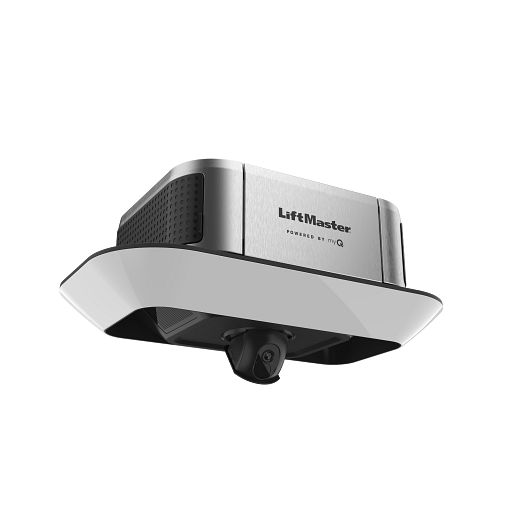
Choosing a garage door opener isn’t as simple as picking whichever one is on sale. The type of drive system you choose directly affects how quietly your door operates, how much maintenance the opener will need over its lifetime, how well it handles your specific door’s weight and size, and how compatible it is with smart home technology.
With several different opener types on the market — and more smart features added every year — it helps to understand exactly what you’re choosing between before you invest. Here’s a guide to the three garage door opener types we install and recommend, so you can make the right call for your home.
📖 Related: Faulty Garage Door Openers and How to Spot Them
Chain Drive Garage Door Openers
Chain drive openers are the most common and most affordable type of garage door opener. They use a metal chain — similar to a bicycle chain — connected to a bar that raises and lowers the door. Because of their robust construction and mechanical simplicity, chain drive openers are extremely durable and can last decades with the right maintenance.
The tradeoff is noise. The metal chain creates noticeable rattling and vibration during operation — audible not just in the garage but in other rooms of the house. If your garage shares a wall with a bedroom or living area, the sound can be disruptive, especially during early morning or late-night use. Chain drive openers also require more maintenance than other types, including periodic chain lubrication and tension adjustment.
Best for: Detached garages, budget-conscious homeowners, or situations where noise isn’t a primary concern.
📖 Related: How Often Should I Get My Garage Door Opener Serviced?
Belt Drive Garage Door Openers
Belt drive openers work on the same principle as chain drives — but instead of a metal chain, they use a reinforced rubber or steel-braided belt. This single difference has an enormous impact on the experience: belt drive openers are significantly quieter, produce far less vibration, and deliver smoother operation.
For homes with an attached garage — especially those with a bedroom, office, or nursery above or adjacent to the garage — a belt drive opener is almost always the recommended choice. The belt doesn’t require lubrication, making day-to-day maintenance simpler than a chain. Modern belt drive openers also tend to come equipped with DC motors that are quieter and more energy efficient than older AC motor designs.
The only meaningful downside is cost — belt drive openers typically run 20–30% more than comparable chain drive models. For most attached-garage homeowners, that premium is worth every dollar.
Best for: Attached garages, homes with living spaces near or above the garage, anyone prioritizing quiet operation.
📖 Related: 5 Surprising Reasons You Should Replace Your Garage Door Opener
Wall-Mounted (Jackshaft) Garage Door Openers
Wall-mounted openers — sometimes called jackshaft openers — are mounted directly on the wall beside the garage door rather than on the ceiling. Instead of a drive belt, chain, or screw, the motor connects directly to the torsion spring shaft and drives the door by turning the spring drums on either side.
Because the motor mounts to the wall, wall-mounted openers free up the entire ceiling of the garage — a major advantage for homeowners with high ceilings, loft storage, or low-clearance spaces. They also have fewer moving parts than ceiling-mounted systems, which means fewer potential points of failure and very quiet operation.
The LiftMaster 98022 is the current industry-leading wall-mount opener and the model we most commonly install for East Valley homeowners who want premium performance. It features a powerful DC motor, built-in Wi-Fi and Bluetooth, integrated battery backup, myQ® smart home compatibility, and a lifetime motor warranty. Like all wall-mount openers, it is built exclusively for sectional garage doors with torsion springs.
The main consideration: wall-mounted openers are the most expensive option, and they only work with torsion spring systems. But for homeowners with the right setup, they’re the gold standard.
Best for: High ceilings, loft storage, premium performance, homes where ceiling space is at a premium.
📖 Related: The New Generation of LiftMaster Garage Door Openers Is Here
What About Horsepower?
Opener type isn’t the only decision — horsepower matters too, and choosing the wrong HP for your door’s weight can lead to premature motor wear and poor performance. For independent ratings of specific opener models, Consumer Reports’ garage door opener buying guide is a trusted resource.
It’s worth noting that the industry has largely shifted to DC motors as the new standard. Compared to older AC motors, DC motors are quieter, more energy efficient, start and stop more smoothly, and are better suited for battery backup integration. Most major manufacturers — including LiftMaster, Chamberlain, and Genie — now build their residential opener lineups exclusively around DC motors, with the standard power range starting at ¾ HP and going up to 1¼ HP. The old ½ HP AC motor openers that were once common are largely being phased out of production.
Here’s how to choose within the current DC motor range:
¾ HP DC — The new baseline. Handles most standard single and double-car doors, including insulated steel doors, comfortably and efficiently.
1 HP DC — A solid mid-range choice for heavier two-car doors, oversized doors, or any door that sees very frequent daily use.
1¼ HP DC — The top of the residential range. Recommended for extra-heavy doors, solid wood doors, or commercial-adjacent applications where maximum power and longevity are the priority.
When in doubt, go with the next tier up. An underpowered opener works harder, wears faster, and is more likely to fail prematurely than one properly matched to your door’s weight.
Smart Features and Battery Backup: Essential in Arizona
Modern garage door openers from LiftMaster, Chamberlain, and Genie now come with Wi-Fi connectivity and app control as standard features. Through apps like myQ®, you can open and close your door remotely, receive alerts every time the door operates, check whether it’s open or closed from anywhere, and integrate with smart home platforms like Google Home and Amazon Alexa.
Battery backup is particularly important for East Valley homeowners. Arizona’s monsoon season brings sudden power outages — and a garage door opener without battery backup means your car could be stuck inside or your garage left unsecured during an outage. Most premium belt drive and wall-mount openers include battery backup as standard. If yours doesn’t, it’s worth the upgrade. The U.S. Department of Energy also notes that energy-efficient openers and insulated garage doors contribute meaningfully to overall home energy performance.
📖 Related: How Rolling Code Protects Your Garage Door from Thieves
Quick Comparison: Which Opener Is Right for You?
Type | Noise Level | Maintenance | Best For | Relative Cost |
|---|---|---|---|---|
Chain Drive | Loudest | Moderate | Detached garages, budget buyers | $ |
Belt Drive | Very quiet | Low | Attached garages, noise-sensitive homes | $$ |
Wall-Mount | Very quiet | Very low | High ceilings, premium performance | $$$ |
Get Expert Garage Door Opener Installation in Gilbert, Mesa & the East Valley
Not sure which opener is right for your home? That’s exactly what we’re here for. Same Day Garage Door Services installs, services, and repairs all major garage door opener brands — including the full LiftMaster Security+ 3.0 lineup — throughout Gilbert, Mesa, Tempe, Chandler, Ahwatukee, Queen Creek, and the entire East Valley.
Our technicians will assess your door’s size and weight, your garage layout, and your noise and feature preferences, then recommend the opener that gives you the best performance and the lowest long-term cost. Contact us today for a free estimate on a new garage door, or schedule your installation online.
📖 Related: Maintenance Tips For Your Garage Door

Trevor L.