How a Damaged Garage Door Could Put You At Risk
Your garage door is one of the most important — and most overlooked — safety features of your home. It protects your vehicles, safeguards your valuables, and serves as a primary entry point that keeps your family secure day and night. But when a garage door is damaged or stops working properly, it stops doing its job. And the risks that follow are more serious than most homeowners realize.
From theft and injury to cascading mechanical damage, a broken garage door demands prompt attention. Here’s a clear look at the risks you face when a damaged garage door goes unaddressed — and why acting quickly is always the right call.
📖 Related: The Dangers of a Malfunctioning Garage Door
Security Risk: Theft and Vandalism
One of the most immediate risks of a damaged garage door is the security vulnerability it creates. Your garage holds some of your most valuable possessions — vehicles, tools, recreational equipment, pool supplies, and often a direct interior entrance to your home. A properly functioning garage door is what keeps all of that secure.
According to the FBI’s Uniform Crime Reporting Program, approximately 9% of residential burglaries involve the garage as the point of entry — and that number rises significantly when a garage door is visibly damaged, stuck open, or not fully closing. Opportunistic criminals actively look for easy access points, and a garage door that doesn’t fully close — even by a few inches — is a clear invitation.
The security risk doesn’t stop at your belongings inside the garage. An attached garage with a compromised door also gives a burglar potential access directly into your home through the interior door. Don’t wait until a theft occurs to address a broken garage door. Call a repair service right away to restore your home’s first line of defense.
📖 Related: Garage Door Repair Scams and What to Watch Out For
Injury Risk: Falling Garage Doors
Garage doors are deceptively heavy. Depending on the size and material, a single residential door can weigh anywhere from 130 to 350 pounds. That weight is counterbalanced entirely by the spring system — and when even one spring breaks or becomes compromised, the door loses that critical support.
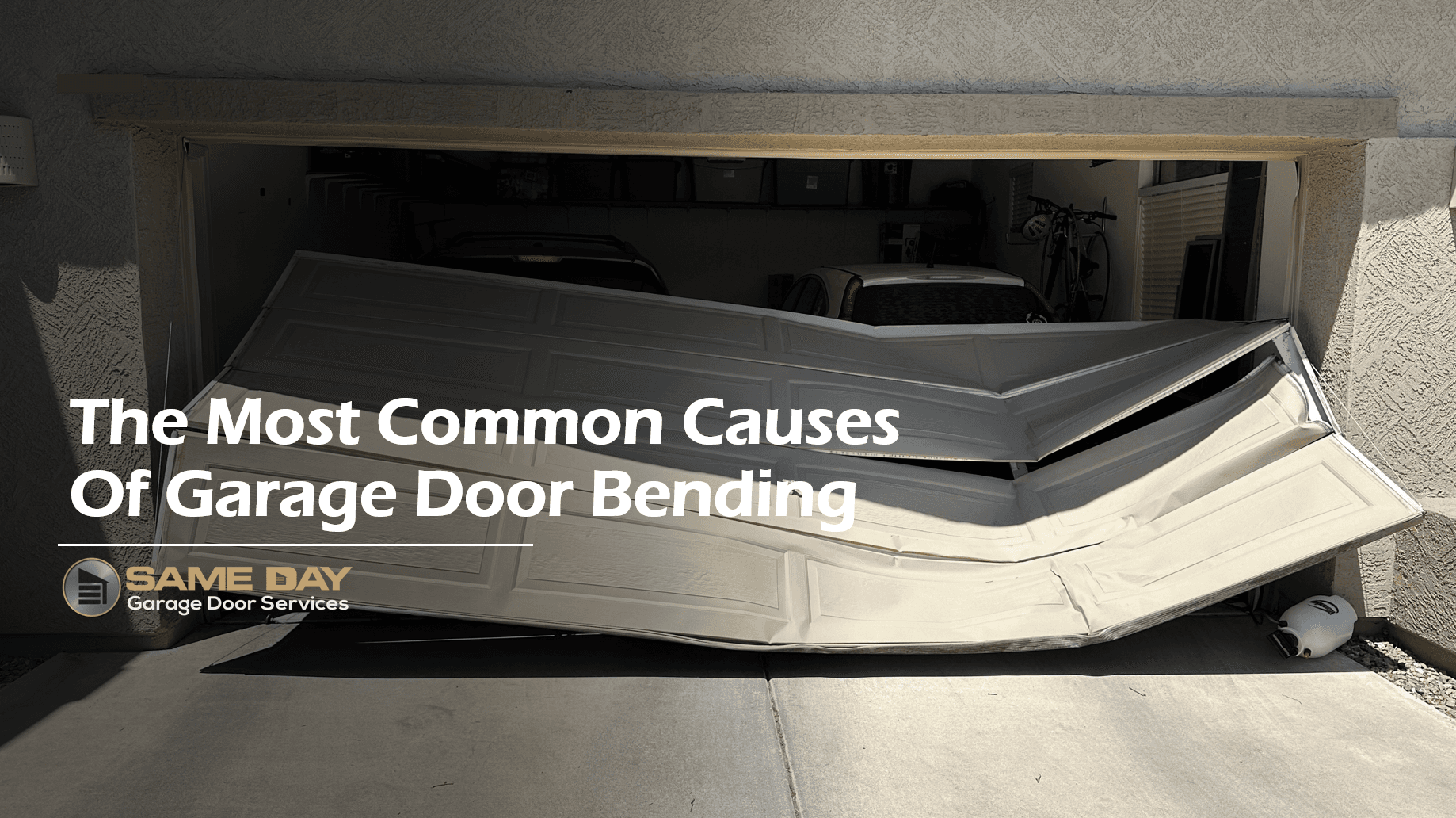
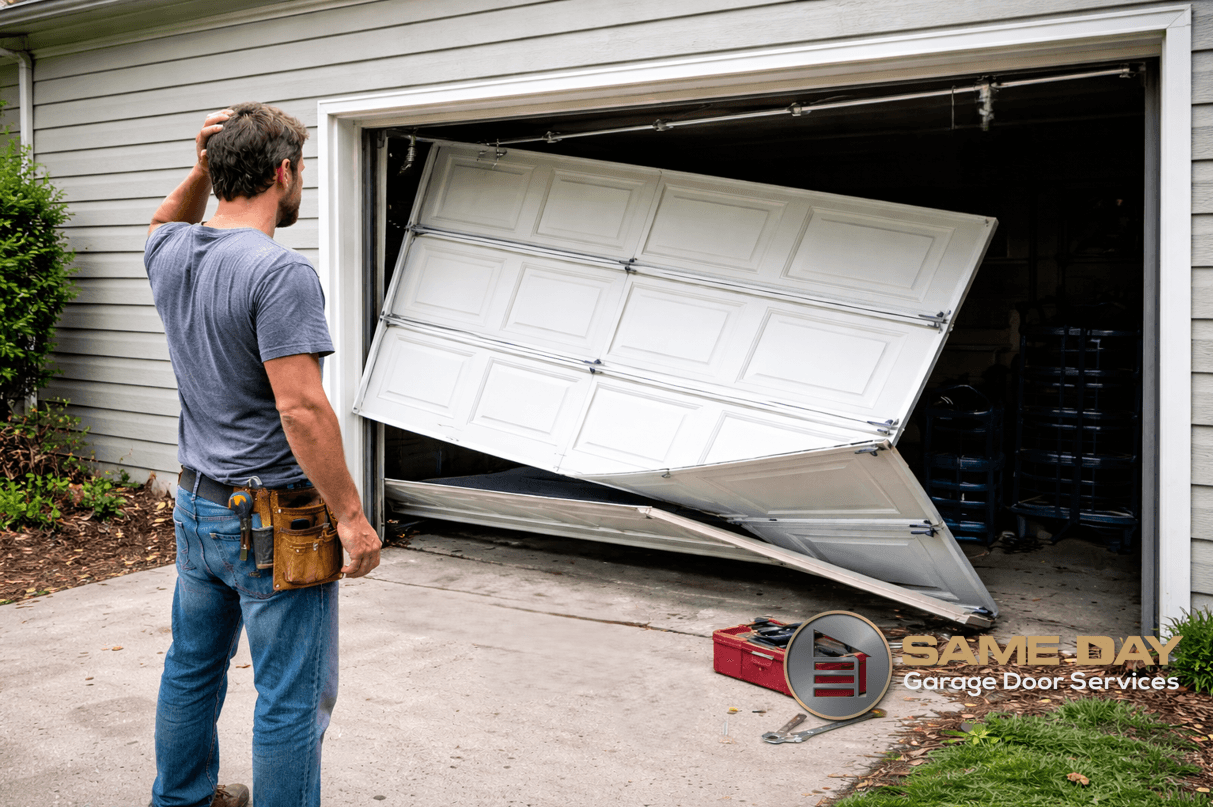
A garage door operating with a broken or weakened spring can fall suddenly and without warning. Children, elderly family members, and pets are especially vulnerable to serious injury from a sudden door fall. This is one of the most documented causes of garage door-related injuries reported to the U.S. Consumer Product Safety Commission (CPSC), which tracks approximately 30,000 garage door injuries in the United States every year.
If your garage door springs are broken or suspect, get the door into the lowest position possible — ideally fully closed and touching the ground — while you wait for a professional. In that position, it poses the least risk to anyone in or around your garage. Do not attempt to manually operate a door with a known spring problem.
📖 Related: Leading Causes and Solutions for Broken Garage Door Springs
Cascading Mechanical Damage
Garage doors are large, but they are operated by surprisingly precise and delicate internal mechanisms. Like any complex system, a small problem left unaddressed rarely stays small. One component under stress begins to strain the components connected to it — and what starts as a minor misalignment or a single worn roller can escalate into damage across the entire system.
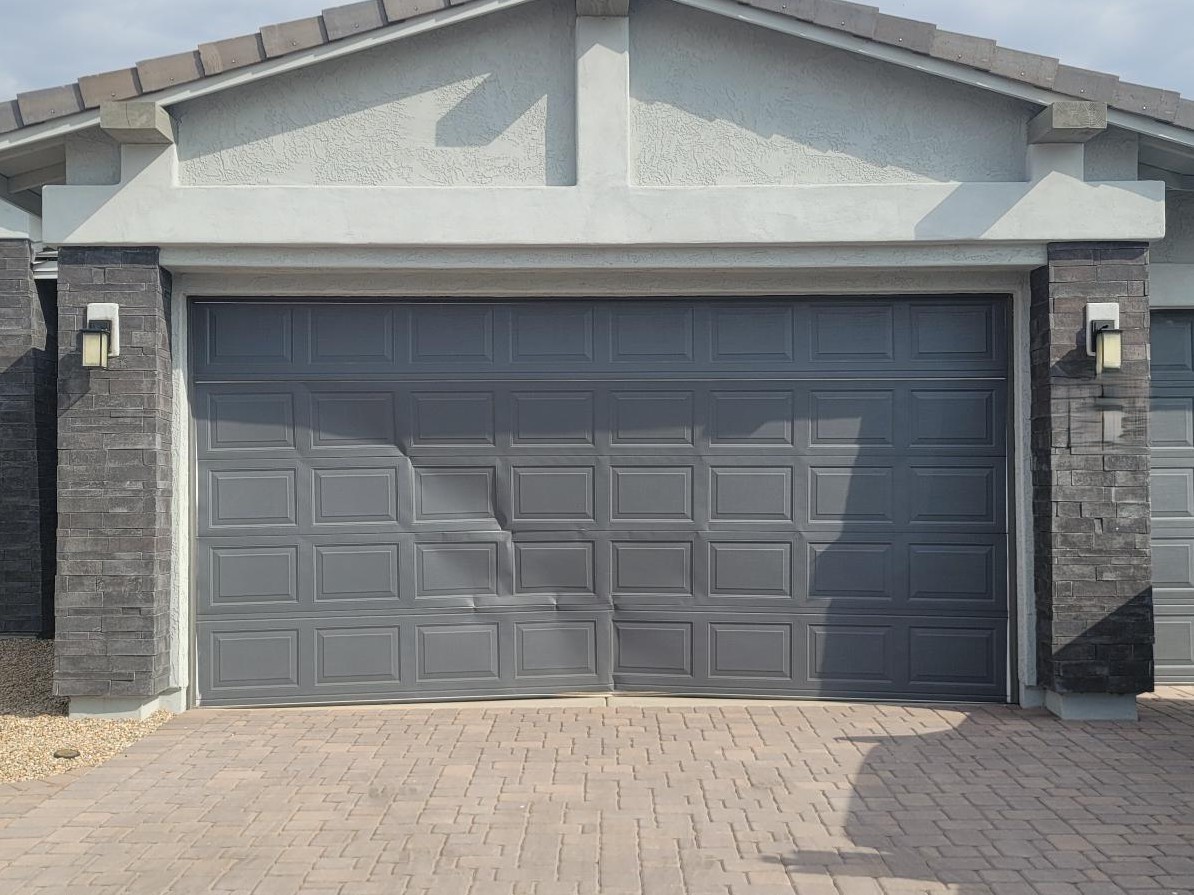
A door that sits even slightly higher on one side than the other is already placing uneven load on the tracks, rollers, cables, and opener motor. Over time — often faster than homeowners expect — these compound stresses can result in bent tracks, snapped cables, burned-out opener motors, and structural damage to the door panels themselves.
At that point, what could have been a simple, affordable repair becomes a full system replacement including new panels, new opener, new keypad, and installation labor. Getting ahead of small issues while they are still small is always the smarter and more cost-effective choice. As the Door & Access Systems Manufacturers Association (DASMA) recommends, an annual visit from a trained door systems technician can keep your door operating safely and help catch developing issues before they become serious.
📖 Related: What Causes Garage Door Brackets To Break?
Arizona-Specific Risks: Heat and Monsoon Season
Here in the East Valley, our climate adds an extra layer of risk to damaged garage doors that homeowners in other parts of the country don’t face. Arizona’s extreme summer heat — regularly exceeding 110°F — accelerates the degradation of rubber seals, lubricants, and metal components alike. Springs and cables that might last years in a milder climate can fail significantly faster here.
Monsoon season brings sudden humidity, dust, and debris that can jam tracks, corrode metal parts, and damage the door’s bottom weather seal. A garage door that isn’t sealing properly during monsoon season allows dust and moisture into your garage, damaging stored belongings, vehicles, and the garage structure itself.
Scheduling maintenance in the spring and fall — before the extremes hit — is the best way to catch developing issues before Arizona’s weather turns them into emergencies.
📖 Related: How Often Should I Get My Garage Door Opener Serviced?
Don’t Wait — Get Same-Day Garage Door Repair in Gilbert, Mesa & the East Valley
A damaged garage door is not a problem that gets better with time. Every day it goes unrepaired is another day your home is less secure, your family is at greater risk, and your system is accumulating additional wear. Same Day Garage Door Services is a family-owned, locally operated business dedicated to fast, affordable, professional garage door repair throughout Gilbert, Mesa, Tempe, Chandler, Queen Creek, Ahwatukee, and the entire East Valley.
In most cases, our skilled technicians can respond and complete your repair the same day you call. Contact us today for a free estimate on a new garage door, or schedule your service online.
📖 Related: Maintenance Tips For Your Garage Door
Trevor L.