Your garage door is one of the most visible parts of your home’s exterior, yet it’s one of the most commonly overlooked when it comes to regular cleaning and upkeep. In Arizona’s East Valley, garage doors face a unique combination of environmental challenges — intense UV radiation, fine dust from desert winds, hard water residue from irrigation systems, and the debris that monsoon season deposits on every exterior surface. Regular cleaning not only keeps your door looking great, it also helps you spot early signs of wear before they turn into costly repairs.
Here’s a step-by-step guide to the best way to clean your garage door, including material-specific tips and what to watch for during your inspection.
📖 Related: Maintenance Tips For Your Garage Door
How Often Should You Clean Your Garage Door?
For most East Valley homeowners, cleaning your garage door twice a year is a good baseline — ideally in the spring before monsoon season kicks in, and again in the fall after it ends. If your home is near a dusty road, has a sprinkler system that hits the door, or if your door is exposed to heavy direct sun, quarterly cleaning will keep it looking and functioning better.
The exterior of your garage door accumulates dust, pollen, hard water mineral deposits, bird droppings, spider webs, and road grime. The interior collects dust, exhaust residue, and cobwebs. Both sides benefit from regular attention.
📖 Related: How Often Should I Get My Garage Door Opener Serviced?
Step 1 — Clear the Area and Declutter
Before you start cleaning, take a few minutes to clear the area around and inside the garage door. Move vehicles, bicycles, and anything stored near the door out into the driveway. You’ll need room to work on both the interior and exterior surfaces, and having a clear workspace makes the whole process faster and more thorough.
Clearing space around the bottom and sides of the door also gives you a better view of the hardware, tracks, and weather seal for the inspection step later.
Step 2 — Gather Your Supplies
Having everything ready before you start prevents you from stopping halfway through. Here’s what you’ll need:
Gloves and a face mask or ventilator
Hand broom or soft-bristle brush
Shop vacuum with hose attachment
Two buckets
Mild dish soap or car wash soap
Non-abrasive sponge and soft microfiber cloths
Garden hose (not a pressure washer)
Step ladder
Vinyl protectant (for weather seal)
Window cleaner, if your door has glass panels
A note on bleach: Use it with extreme caution — diluted bleach can damage painted finishes, strip protective coatings, and discolor certain materials if left on the surface. Always spot-test in an inconspicuous area first, apply only to the stained area, and rinse immediately and thoroughly. For most stains, a stronger concentration of dish soap or a dedicated car wash cleaner is safer and equally effective.
Step 3 — Remove Dust and Debris
Start by removing loose dust, cobwebs, dead insects, and debris from both the interior and exterior surfaces of the door. Use a hand broom or soft brush, working from the top of the door down to the bottom. Pay particular attention to panel grooves and recessed areas where dust and spider webs accumulate.
Follow up with a shop vacuum and its hose attachment to collect the loosened debris. Run the hose along the tracks on both sides of the door — dust and grit that accumulates in the tracks increases wear on your rollers and should be removed regularly. As Bob Vila’s garage door maintenance guide notes, keeping the tracks clean is one of the most important steps in any garage door upkeep routine. Wear a face mask during this step to keep dust out of your mouth and lungs, especially in Arizona where desert dust is fine and pervasive.
Finish with a damp microfiber cloth to pick up any remaining fine dust before washing — this prevents grit from scratching your door’s surface when you apply soapy water.
Step 4 — Wash the Door
Mix a mild dish soap or car wash soap with water in a bucket at the manufacturer’s recommended dilution. Using a soft non-abrasive sponge or microfiber cloth, wash both the interior and exterior surfaces of the door, working in sections from top to bottom. Rinse your sponge frequently.
Do not use a pressure washer. High-pressure water can force water into panel seams, damage painted or vinyl finishes, and strip weatherstripping adhesive. A garden hose on a gentle setting is all you need to rinse effectively.
For stubborn hard water stains — common in the East Valley where irrigation systems often hit garage doors — a diluted white vinegar solution applied with a soft cloth is safer and more effective than bleach. Let it sit for 2–3 minutes, then rinse thoroughly.
After rinsing, dry the surface with clean microfiber towels to prevent water spots, which are especially visible on darker colored doors in Arizona’s hard water conditions.
Step 5 — Clean by Material Type
Different garage door materials need slightly different care during washing:
Steel doors — The most forgiving to clean. Mild soap and water works perfectly. Avoid abrasive scrubbers that can scratch the painted surface. Look for any chips or scratches in the paint after washing — exposed bare metal will start to rust if left untreated, especially along the bottom panel.
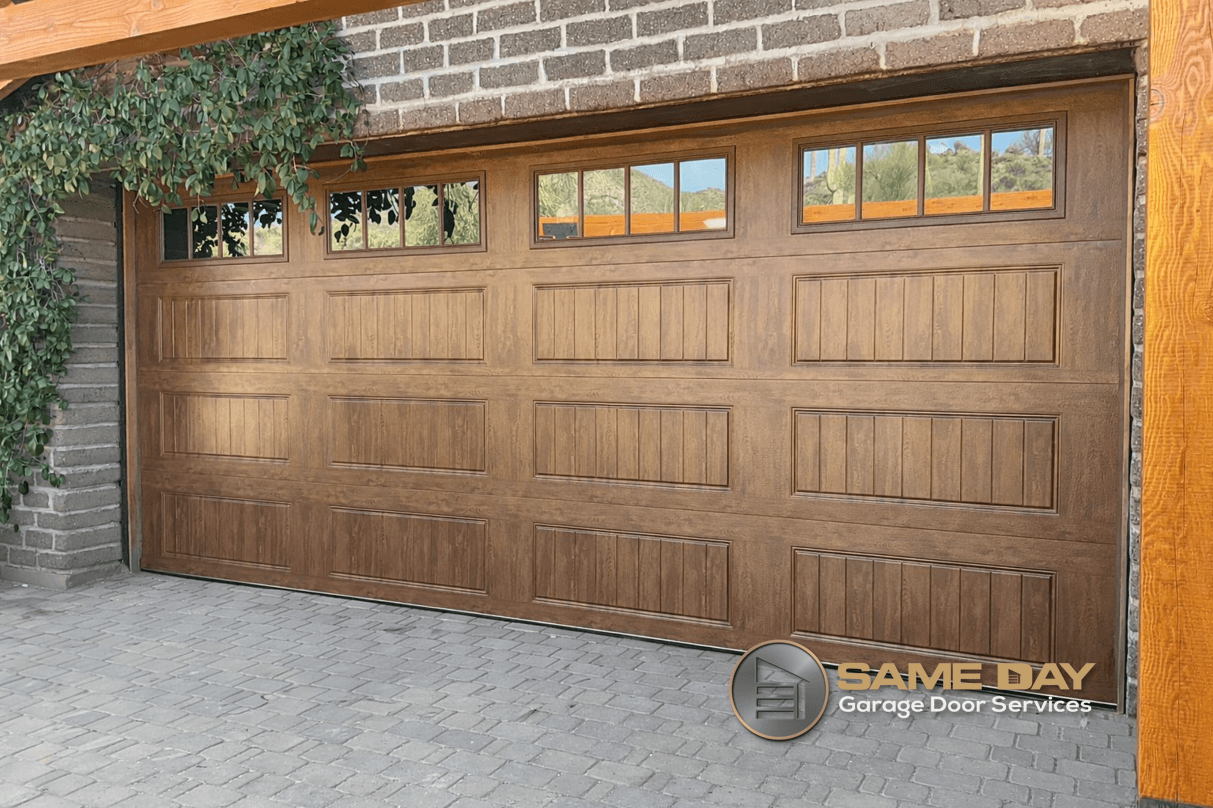
Wood doors — Use minimal water and dry immediately after rinsing. Standing water can soak into wood and cause warping or swelling. After cleaning, check the surface for any areas where the paint or sealant is cracking or peeling — Arizona’s UV intensity makes annual repainting or resealing essential for wood doors.
Aluminum doors — Clean well with mild soap and water. Aluminum doesn’t rust, but it can oxidize and develop a chalky film over time. A dedicated aluminum cleaner or car wax applied after washing restores the finish and provides UV protection.
Vinyl doors — Very easy to clean. Mild soap and water, soft cloth, done. Avoid harsh chemicals which can cause discoloration. A UV protectant applied after washing helps prevent the fading that is a known concern with vinyl in Arizona’s intense sun.
📖 Related: Choosing the Best Material for Garage Door Replacement
Step 6 — Inspect While You Clean
Cleaning day is the ideal time for a thorough visual inspection of your garage door system. With the door freshly cleaned and well-lit, look for:
Weather seal (bottom seal): Check for cracks, brittleness, or gaps. Apply a vinyl protectant to extend its life. If it’s cracked or compressed flat, it needs replacing — a damaged bottom seal lets in dust, insects, moisture, and hot air.
Hardware: Check hinges, rollers, brackets, and cables for rust, wear, or loose bolts. Tighten any loose hardware with a wrench, but do not attempt to adjust or replace springs yourself.
Paint and finish: Look for chips, scratches, or areas where paint is peeling. Touch up bare metal spots promptly to prevent rust.
Tracks: Ensure both tracks are aligned and free of debris. Visible bends or gaps between the track and the wall indicate a professional should take a look.
Do not attempt to adjust or repair torsion springs — they operate under extreme tension and should only be handled by a trained garage door technician. According to the U.S. Consumer Product Safety Commission (CPSC), garage door-related injuries are among the most common home improvement injuries in the U.S. — springs are responsible for a significant portion of them.
📖 Related: When Should You Replace Your Garage Door Seal?
📖 Related: How and Why You Should Use Garage Door Lubricant
Schedule a Garage Door Service in Gilbert, Mesa & the East Valley
Regular cleaning is a great habit, but it works best as part of a broader maintenance routine. If your inspection turns up anything concerning — or if you simply haven’t had a professional look at your door in the last year — Same Day Garage Door Services is ready to help. We serve Gilbert, Mesa, Tempe, Chandler, Queen Creek, Ahwatukee, and the entire East Valley with fast, professional garage door maintenance, repair, and installation.
Contact us today for a free estimate on a new garage door, or schedule your service online.

Trevor L.